
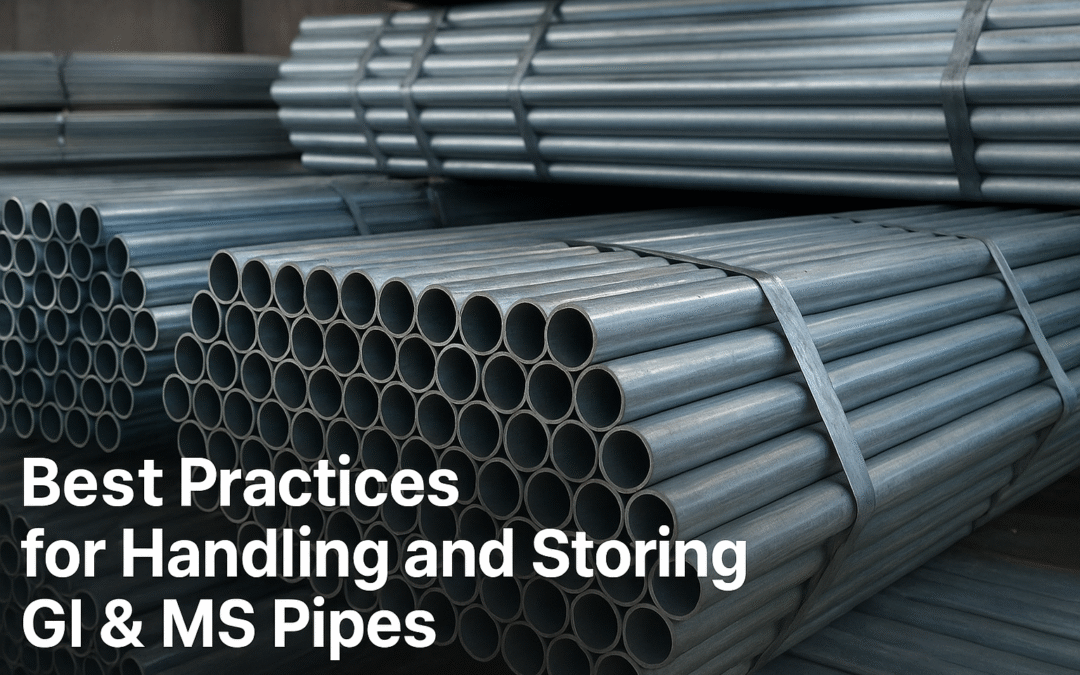
Best Practices for Handling and Storing GI & MS Pipes help prevent damage, corrosion, and material loss before pipes are even installed. Improper storage often leads to rust, dents, and rejection at site. This guide explains how GI and MS pipes should be handled, stacked, protected, and managed at yards and project locations, helping buyers, contractors, and industries maintain quality and extend pipe life.
Contents
- 1 TL;DR
- 2 Introduction
- 3 Understanding GI & MS Pipes Before Handling
- 4 Why Handling and Storage Matter More Than You Think
- 5 Common Mistakes Seen at Sites and Yards
- 6 Role of the Supplier in Proper Handling
- 7 Proper Unloading Practices for GI & MS Pipes
- 8 Manual vs Mechanical Handling
- 9 Pipe Yard Layout and Ground Preparation
- 10 Segregation of GI and MS Pipes
- 11 Correct Stacking Methods for GI & MS Pipes
- 12 Importance of Ventilation and Airflow
- 13 Internal Movement Within the Yard
- 14 Ideal Storage Duration for GI & MS Pipes
- 15 Weather Protection Measures for Outdoor Storage
- 16 Sun and Heat Exposure Management
- 17 Table: Storage Risks and Preventive Practices for GI & MS Pipes
- 18 Rust Prevention for MS Pipes During Storage
- 19 Protecting the Zinc Coating of GI Pipes
- 20 Labeling and Inventory Identification
- 21 Periodic Inspection Checklist
- 22 Common Handling Mistakes That Damage GI & MS Pipes
- 23 Mixing GI and MS Pipes During Storage
- 24 Long-Term Storage Guidelines for Projects and Warehouses
- 25 Transportation-to-Storage Transition Care
- 26 Role of Supplier Handling Standards
- 27 Conclusion
- 28 FAQs:
- 28.1 1. Why are best practices important for handling GI and MS pipes?
- 28.2 2. Can GI pipes be stored outdoors?
- 28.3 3. How long can MS pipes be stored safely?
- 28.4 4. Should GI and MS pipes be stacked together?
- 28.5 5. What causes rust during storage?
- 28.6 6. How do distributors handle pipes differently?
- 28.7 7. Is covering pipes with plastic sheets recommended?
- 28.8 8. How often should stored pipes be inspected?
- 28.9 9. Does improper storage affect installation?
- 28.10 10. Who should buyers rely on for storage guidance?
TL;DR
- Best Practices for Handling and Storing GI & MS Pipes reduce rust, bending, and surface damage
- Proper lifting, stacking, and ventilation protect pipe strength and coating
- GI pipes need extra care to preserve zinc coating during storage
- MS pipes require dry, stable conditions to avoid oxidation
- Yard layout and ground preparation play a major role in pipe safety
- Working with a Top GI and MS Pipe Distributor in Chennai ensures pipes arrive stored correctly from day one
Introduction
Best Practices for Handling and Storing GI & MS Pipes are often ignored, yet they directly impact pipe performance, safety, and lifespan. Many site failures blamed on poor material quality actually begin much earlier—during unloading, storage, or internal movement at yards and construction sites. Even high-grade GI and MS pipes can deteriorate quickly if stored incorrectly.
GI pipes depend heavily on their zinc coating for corrosion resistance. Rough handling or poor stacking can damage this protective layer, exposing the steel beneath. MS pipes, while strong and versatile, are more prone to rust if kept in damp or uneven conditions. This is why handling and storage are not just logistics tasks—they are quality control processes.
This blog explains Best Practices for Handling and Storing GI & MS Pipes in a practical, easy-to-follow way. It covers what to do from the moment pipes arrive, how to store them safely, how to avoid common mistakes, and why choosing the right supplier matters. Whether pipes are meant for construction, industrial use, water supply, or fabrication, applying these practices helps avoid delays, wastage, and unnecessary replacement costs.
Reputed suppliers, especially a Top GI and MS Pipe Distributor in Chennai, already follow many of these standards at their warehouses. Understanding them helps buyers maintain the same quality standards at their own sites.
Understanding GI & MS Pipes Before Handling
What Are GI Pipes?
GI pipes are steel pipes coated with zinc to protect against corrosion. This coating is effective only if it remains intact. Scratches, dents, or prolonged moisture exposure can reduce their resistance to rust, making careful handling essential.
What Are MS Pipes?
MS pipes are plain carbon steel pipes used widely for structural, mechanical, and industrial purposes. They are strong but vulnerable to oxidation when exposed to moisture and air for long periods.
Knowing these differences is the foundation of Best Practices for Handling and Storing GI & MS Pipes, because each type reacts differently to handling stress and environmental conditions.
To understand the difference between GI and MS pipes visit- Difference Between GI and MS Pipe |Khandelwal Pipe Syndicate
Buyers should always ensure GI and MS pipes comply with Indian quality norms laid out by the Bureau of Indian Standards (BIS) to guarantee safety, durability, and performance.
Why Handling and Storage Matter More Than You Think
Many project teams focus heavily on specifications and pricing but overlook how pipes are treated after delivery. Poor storage leads to:
- Bent or oval-shaped pipes
- Surface rust and pitting
- Damaged threads and pipe ends
- Rejection during inspection
- Reduced service life after installation
Following Best Practices for Handling and Storing GI & MS Pipes protects investment value and ensures the pipes perform exactly as intended.
A Top GI and MS Pipe Distributor in Chennai typically follows strict inbound and outbound handling procedures, ensuring pipes remain usable from warehouse to site. Matching those standards on-site is key.
Common Mistakes Seen at Sites and Yards
Before moving into correct methods, it helps to understand what often goes wrong:
- Pipes dumped directly on bare soil
- Mixed storage of GI and MS pipes
- Over-stacking causing deformation
- Dragging pipes instead of lifting
- No cover during rain or humid weather
Each of these increases material loss. Best Practices for Handling and Storing GI & MS Pipes are designed specifically to avoid such risks.
Role of the Supplier in Proper Handling
Correct handling starts before pipes reach the buyer. A reliable Top GI and MS Pipe Distributor in Chennai ensures:
- Pipes are bundled and secured properly
- Pipe ends are protected during transport
- Correct class and size are segregated
- Storage yards are dry and level
When pipes arrive in good condition, maintaining that condition becomes much easier at the project site.
Proper Unloading Practices for GI & MS Pipes
One of the most critical stages in Best Practices for Handling and Storing GI & MS Pipes is unloading. Most surface damage, bending, and coating loss happen within the first few minutes of unloading at site.
Safe Unloading Methods
- Always unload pipes on a flat, level surface
- Use slings, belts, or forks with padding
- Avoid direct metal-to-metal contact during unloading
- Never drop pipes from trucks or trailers
GI pipes, in particular, must be handled with care because dropping or dragging can damage their zinc coating. MS pipes can withstand impact slightly better but may bend or develop surface stress if mishandled.
A Top GI and MS Pipe Distributor in Chennai usually follows controlled unloading methods at warehouses, setting the quality benchmark buyers should maintain on their own sites.
Manual vs Mechanical Handling
Manual Handling Guidelines
Manual handling is acceptable for smaller diameters and shorter pipe lengths, but it needs proper coordination.
- Lift pipes evenly from both ends
- Use gloves to improve grip and safety
- Avoid rolling pipes across rough surfaces
Improper manual handling leads to pipe-end deformation and coating scratches—two common quality complaints seen on-site.
Mechanical Handling Guidelines
For bulk quantities or larger diameters, mechanical handling is recommended.
- Use cranes, forklifts, or hydras with nylon slings
- Ensure slings are clean and free of sharp edges
- Maintain balance during lifting to avoid bending
These techniques directly support Best Practices for Handling and Storing GI & MS Pipes, especially in large industrial or infrastructure projects.
Pipe Yard Layout and Ground Preparation
Pipe yard design plays a major role in preserving material quality before installation.
Ground Preparation Rules
- Avoid bare soil—use concrete, pavers, or wooden sleepers
- Ensure proper drainage to prevent water accumulation
- Keep storage areas elevated during monsoon seasons
Storing pipes directly on wet ground accelerates corrosion, especially for MS pipes.
A Top GI and MS Pipe Distributor in Chennai typically stores pipes on raised platforms, ensuring air circulation underneath. Following similar layouts on-site helps avoid premature rusting.
Segregation of GI and MS Pipes
One major mistake at sites is mixing GI and MS pipes together.
Why Segregation Is Important
- GI pipes need protection from abrasion
- MS pipes may release surface rust dust
- Different applications require different inspection standards
Maintaining segregation is a key element of Best Practices for Handling and Storing GI & MS Pipes and simplifies inventory checks.
Practical Segregation Tips
- Use separate racks for GI and MS pipes
- Label stacks clearly by grade, size, and class
- Avoid stacking different diameters together
Correct Stacking Methods for GI & MS Pipes
Incorrect stacking causes bending, ovality, and stress points.
Stacking Guidelines
- Stack pipes in straight, uniform layers
- Place wooden battens between layers
- Limit stack height to avoid excessive load
- Align pipe ends evenly
GI pipes should always be stacked with additional care to prevent zinc coating damage.
A Top GI and MS Pipe Distributor in Chennai generally follows manufacturer-recommended stacking heights to maintain pipe shape and quality.
Importance of Ventilation and Airflow
Even when pipes are covered, airflow is necessary.
- Avoid fully airtight coverings
- Use tarpaulins that allow ventilation
- Prevent condensation buildup
Poor ventilation traps moisture, which is one of the biggest enemies of MS pipes and an indirect threat to GI pipes as well.
Internal Movement Within the Yard
Pipes are often moved multiple times before installation. Improper internal handling increases damage risk.
Best Movement Practices
- Lift instead of dragging
- Use pipe trolleys or rollers
- Avoid moving pipes across rough cement or gravel
These practices directly strengthen Best Practices for Handling and Storing GI & MS Pipes and improve pipe acceptance during final inspections.
Ideal Storage Duration for GI & MS Pipes
Understanding how long pipes can be safely stored is a crucial part of Best Practices for Handling and Storing GI & MS Pipes. While both GI and MS pipes are durable, prolonged storage without precautions can reduce performance.
Recommended Storage Periods
- GI pipes can be stored for longer periods if kept dry and well-ventilated
- MS pipes require quicker usage or additional protection due to surface oxidation risk
- Frequent inspection becomes essential beyond 30–45 days of storage
A Top GI and MS Pipe Distributor in Chennai typically follows a first-in, first-out inventory system to reduce long-term exposure risks.
Weather Protection Measures for Outdoor Storage
Outdoor storage is common at construction and infrastructure sites, making weather control a critical factor.
Protection from Rain and Moisture
- Use raised platforms or sleepers
- Cover pipes with breathable tarpaulins
- Ensure slopes for water runoff
- Avoid plastic sheets that trap condensation
Moisture exposure is one of the leading reasons for rust formation on MS pipes and zinc coating damage on GI pipes.
Sun and Heat Exposure Management
Direct sunlight does not immediately damage pipes, but long-term exposure can create issues.
- Excessive heat may degrade surface coatings
- Prolonged exposure can cause uneven ageing
- GI pipe coatings may lose uniformity over time
These factors reinforce why shade planning is included in Best Practices for Handling and Storing GI & MS Pipes at professional yards.
Table: Storage Risks and Preventive Practices for GI & MS Pipes
| Storage Factor | Risk if Ignored | Recommended Best Practice |
|---|---|---|
| Ground Contact | Rust, pitting | Use wooden or concrete sleepers |
| Moisture | Corrosion | Ensure drainage and ventilation |
| Stacking Height | Pipe deformation | Limit stack height |
| Mixed Materials | Surface damage | Store GI and MS pipes separately |
| Long Storage Duration | Quality degradation | Rotate stock regularly |
This table reflects the exact handling standards followed by a Top GI and MS Pipe Distributor in Chennai to maintain material integrity.
Rust Prevention for MS Pipes During Storage
Rust formation begins quickly on MS pipes when exposed to humid air.
Preventive Measures
- Apply temporary rust preventive oil if storage exceeds 30 days
- Store away from coastal or high-humidity zones where possible
- Inspect surfaces weekly for early oxidation
Rust control is one of the most important Best Practices for Handling and Storing GI & MS Pipes in industrial environments.
Protecting the Zinc Coating of GI Pipes
GI pipes depend on the integrity of their zinc layer.
Common Mistakes to Avoid
- Dragging pipes across rough surfaces
- Storing under leaking roofs
- Allowing stagnant water accumulation inside pipes
Any damage to the coating reduces the lifespan of GI pipes, even if the damage seems minor initially.
Labeling and Inventory Identification
Clear labeling prevents confusion, mishandling, and incorrect usage.
Labeling Best Practices
- Mark pipe grade, size, and thickness
- Separate stacks by application
- Keep delivery documentation attached
These simple steps are standard practice at every Top GI and MS Pipe Distributor in Chennai and should be replicated at project sites.
Periodic Inspection Checklist
Regular inspection ensures early detection of problems.
What to Inspect
- Surface rust or white rust
- Pipe-end deformation
- Coating damage
- Water accumulation inside pipes
Inspection routines are a core part of Best Practices for Handling and Storing GI & MS Pipes, especially during long-term storage.
Common Handling Mistakes That Damage GI & MS Pipes
Even good-quality pipes can fail early if basic handling rules are ignored. Avoiding these mistakes is a core element of Best Practices for Handling and Storing GI & MS Pipes.
Dragging Pipes on Rough Surfaces
Dragging pipes across concrete or metal edges damages:
- Zinc coating on GI pipes
- Surface finish of MS pipes
This leads to corrosion starting faster than expected.
Improper Lifting Methods
Using chains without padding or incorrect fork spacing can:
- Dent pipe walls
- Deform pipe ends
- Affect pipe strength during installation
A Top GI and MS Pipe Distributor in Chennai always uses nylon slings or padded hooks to prevent such damage.
Mixing GI and MS Pipes During Storage
Storing different materials together creates confusion and physical damage.
Why Separation Matters
- Zinc coating on GI pipes can wear off when stacked with MS pipes
- MS pipe rust transfer can stain GI pipes
- Grades and thicknesses get mixed, leading to installation errors
Proper segregation is a key part of Best Practices for Handling and Storing GI & MS Pipes at project sites.
Long-Term Storage Guidelines for Projects and Warehouses
Some projects require pipes to be stored for months. In such cases, advanced storage care is necessary.
Long-Term Storage Best Practices
- Reapply protective coatings periodically on MS pipes
- Rotate pipe bundles every 30–45 days
- Store pipes with open ends slightly angled to prevent water stagnation
- Cover stacks with breathable material
A Top GI and MS Pipe Distributor in Chennai follows strict long-term storage protocols to preserve pipe quality before dispatch.
Transportation-to-Storage Transition Care
Damage often happens during unloading and stacking.
Safe Transition Practices
- Inspect pipes immediately after unloading
- Remove wet packing materials
- Dry pipes before stacking if exposed to rain
These steps reduce hidden corrosion risks and reinforce Best Practices for Handling and Storing GI & MS Pipes from delivery to storage.
Role of Supplier Handling Standards
Many pipe-related failures begin before pipes even reach the buyer.
Why Supplier Practices Matter
- Proper yard handling preserves coating and shape
- Standardized storage avoids contamination
- Professional loading reduces transit damage
Choosing a reliable Top GI and MS Pipe Distributor in Chennai minimizes handling-related risks right from the source.
Conclusion
Following Best Practices for Handling and Storing GI & MS Pipes is not optional—it directly impacts pipe performance, lifespan, and project success. From careful unloading to proper stacking, moisture control, and supplier-grade storage discipline, every step matters. Working with an experienced Top GI and MS Pipe Distributor in Chennai ensures pipes are handled correctly from yard to site, reducing losses and long-term risks.
For reliable supply, expert handling standards, and consistent material quality, connect with a trusted GI and MS pipe supplier’s website today and secure pipes that are delivered and stored the right way.
FAQs:
1. Why are best practices important for handling GI and MS pipes?
Best Practices for Handling and Storing GI & MS Pipes prevent corrosion, deformation, and early failure, ensuring pipes perform as intended throughout their service life.
2. Can GI pipes be stored outdoors?
Yes, GI pipes can be stored outdoors if elevated, well-ventilated, and protected from stagnant water as part of proper handling and storage practices.
3. How long can MS pipes be stored safely?
MS pipes should ideally be used within 30 days or protected with preventive coatings if stored longer, as recommended in Best Practices for Handling and Storing GI & MS Pipes.
4. Should GI and MS pipes be stacked together?
No. Separating materials avoids surface damage and confusion, which is strongly advised under Best Practices for Handling and Storing GI & MS Pipes.
5. What causes rust during storage?
Moisture, poor ventilation, ground contact, and damaged coatings are main causes of rust during improper pipe storage.
6. How do distributors handle pipes differently?
A Top GI and MS Pipe Distributor in Chennai uses controlled stacking, protective lifting tools, and scheduled inspections to maintain pipe quality.
7. Is covering pipes with plastic sheets recommended?
Plastic sheets are not ideal because they trap moisture. Breathable covers are preferred under Best Practices for Handling and Storing GI & MS Pipes.
8. How often should stored pipes be inspected?
Pipes should be visually inspected weekly, especially in humid environments or long-term storage conditions.
9. Does improper storage affect installation?
Yes. Bent ends, rust, and damaged coatings increase installation time, leakage risk, and joint failures.
10. Who should buyers rely on for storage guidance?
Buyers should consult a Top GI and MS Pipe Distributor in Chennai to understand correct handling methods based on pipe grade and project duration.