Contents
- 1 TL;DR
- 2 Short Summary
- 3 Introduction
- 4 What Are GI Pipes?
- 5 How GI Pipes Are Manufactured
- 6 Key Characteristics of GI Pipes
- 7 Why GI Pipes Continue to Be Widely Used
- 8 Choosing a Reliable Supplier
- 9 Common Applications of GI Pipes
- 10 Construction Industry
- 11 Agricultural Applications
- 12 Fire Protection Systems
- 13 Industrial Applications
- 14 Infrastructure Projects
- 15 Advantages of GI Pipes
- 16 Understanding the Limitations of GI Pipes
- 17 Common GI Pipe Sizes and Classifications
- 18 Understanding GI Pipe Classes
- 19 Factors to Consider Before Buying GI Pipes
- 20 Best Practices for Handling and Storage
- 21 Common Misconceptions About GI Pipes
- 22 Why Product Knowledge Matters
- 23 Future of GI Pipes in Construction and Industry
- 24 How to Choose the Right GI Pipes
- 25 Frequently Asked Questions
- 25.1 What are GI pipes used for?
- 25.2 Why are GI pipes galvanized?
- 25.3 Are GI pipes suitable for outdoor applications?
- 25.4 How long do GI pipes last?
- 25.5 Are GI pipes available in different sizes?
- 25.6 What is the difference between GI pipes and MS pipes?
- 25.7 Can GI pipes be used for industrial applications?
- 25.8 What should buyers check before purchasing GI pipes?
- 25.9 Where can I buy GI pipes in Chennai?
- 25.10 Why is selecting the right distributor important?
- 26 Conclusion
TL;DR
The Complete Guide to GI Pipes for Construction and Industrial Use explains what galvanized iron (GI) pipes are, how they are manufactured, where they are used, and why they continue to play an important role across construction, infrastructure, water supply, agriculture, and industrial sectors. It also covers the key characteristics, benefits, limitations, and important considerations buyers should know before selecting GI pipes. If you’re looking for reliable GI pipe supply in Chennai, working with an experienced distributor such as Khandelwal Pipe Syndicate can help ensure access to certified products suitable for your project requirements.
Short Summary
The Complete Guide to GI Pipes for Construction and Industrial Use is designed for contractors, engineers, builders, procurement professionals, fabricators, and anyone looking to understand GI pipes in greater detail. Instead of focusing only on product features, this guide explains the role GI pipes play in modern construction and industrial applications, how they differ from other piping materials, and the factors that influence their performance and service life.
Whether you are planning a residential plumbing system, a commercial building, a manufacturing facility, or an infrastructure project, understanding GI pipes helps you make better purchasing and engineering decisions.
Introduction
Galvanized Iron (GI) pipes have been used across construction and engineering projects for decades because they combine the strength of steel with an added layer of corrosion protection. Even as newer piping materials have entered the market, GI pipes continue to be widely used in applications where durability, structural strength, and long service life are important.
This Complete Guide to GI Pipes for Construction and Industrial Use aims to provide clear, factual, and practical information about GI pipes without making exaggerated claims or comparing products unfairly. Every construction project has different technical requirements, and selecting the right pipe depends on factors such as operating conditions, application, pressure requirements, environmental exposure, and applicable engineering standards.
From residential plumbing systems to industrial facilities, GI pipes remain a trusted solution because of their versatility and proven performance under a wide range of operating conditions. Their widespread availability, standardized dimensions, and compatibility with multiple applications have made them one of the most commonly specified piping materials in India.
Throughout this Complete Guide to GI Pipes for Construction and Industrial Use, we will examine what GI pipes are, how they are manufactured, where they are commonly used, the standards that apply to them, and the factors buyers should evaluate before purchasing.
What Are GI Pipes?
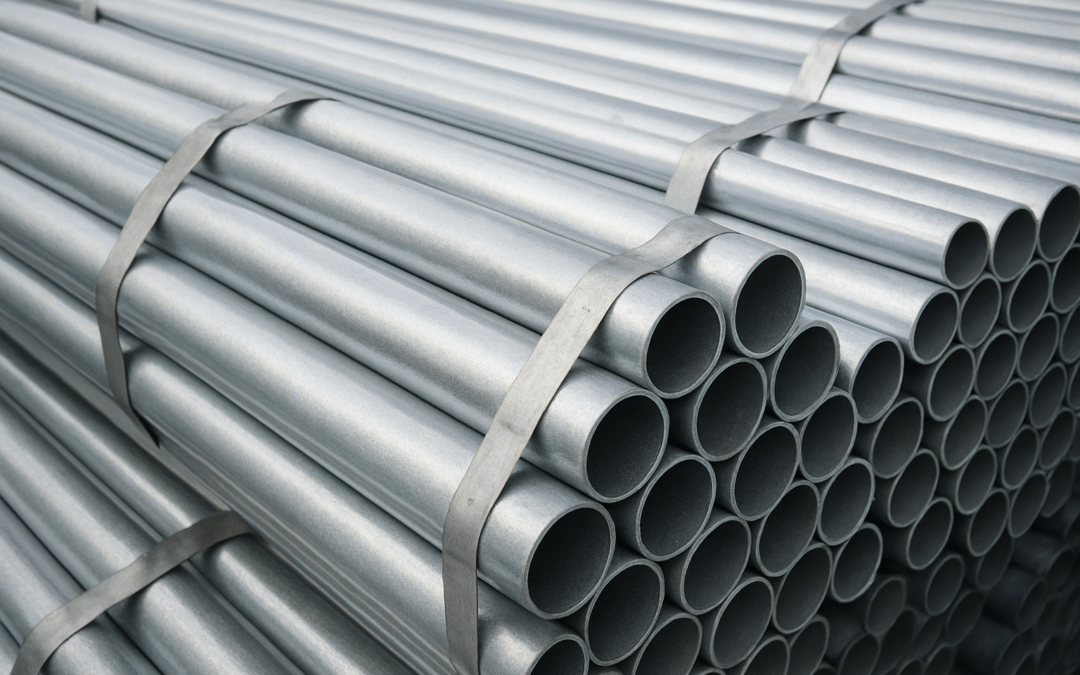
A GI pipe, commonly known as a Galvanized Iron pipe, is a steel pipe that has been coated with a protective layer of zinc through a process called galvanization. The zinc coating acts as a protective barrier that helps reduce corrosion when the pipe is exposed to moisture and atmospheric conditions.
Although the term “iron” is widely used in the industry, modern GI pipes are generally manufactured from steel before undergoing the galvanization process. The zinc coating provides additional protection compared to uncoated steel, making GI pipes suitable for many indoor and outdoor applications.
The Complete Guide to GI Pipes for Construction and Industrial Use would not be complete without understanding that galvanization does not make a pipe completely immune to corrosion. Instead, it significantly improves corrosion resistance under suitable operating conditions, helping extend the service life of the pipe when correctly selected and maintained.
How GI Pipes Are Manufactured
Understanding the manufacturing process helps explain why GI pipes are widely used across multiple industries.
Although manufacturing methods vary slightly between manufacturers, the general process includes:
Steel Pipe Manufacturing
The process begins with manufacturing a steel pipe using standard pipe production methods. The steel is formed into a cylindrical shape and welded to produce the required diameter and wall thickness.
The pipe is then inspected to ensure dimensional accuracy before galvanization.
Surface Preparation
Before zinc coating can be applied, the pipe surface must be cleaned thoroughly.
This preparation usually involves removing:
- Rust
- Mill scale
- Oil
- Dirt
- Surface contaminants
Proper surface preparation helps the zinc coating bond effectively to the steel surface.
Hot-Dip Galvanization
One of the most widely used methods for producing GI pipes is hot-dip galvanization.
In this process, the cleaned steel pipe is immersed in molten zinc at a controlled temperature. During this stage, the zinc reacts metallurgically with the steel surface, forming protective zinc-iron alloy layers along with an outer zinc coating.
This protective layer contributes to the corrosion resistance associated with GI pipes.
Inspection and Quality Checks
After galvanization, manufacturers typically perform quality inspections before the pipes are dispatched.
These inspections may include:
- Visual inspection
- Dimensional verification
- Coating thickness checks
- Straightness verification
- Pressure testing where applicable
Testing requirements vary depending on the applicable product standards and intended application.
Key Characteristics of GI Pipes
The Complete Guide to GI Pipes for Construction and Industrial Use should also explain the characteristics that have contributed to the continued use of GI pipes across many sectors.
Some of the commonly recognised characteristics include:
Corrosion Resistance
The zinc coating helps protect the steel underneath from exposure to moisture and atmospheric conditions. This protective layer contributes to improved corrosion resistance compared to uncoated steel.
Mechanical Strength
Because GI pipes are manufactured from steel, they retain the mechanical strength required for many structural and utility applications.
This strength makes them suitable for installations where pipes may experience mechanical loads or physical impact.
Wide Availability
GI pipes are manufactured in various diameters, wall thicknesses, and pressure classes, allowing engineers to specify products based on project requirements.
Ease of Fabrication
Depending on the application, GI pipes can be threaded, joined, and installed using commonly accepted engineering practices.
Their standardized dimensions also simplify replacement and maintenance.
Long Service Life
When correctly specified, installed, and maintained within appropriate operating conditions, GI pipes can provide long service life in many construction and utility applications.
However, service life depends on multiple factors, including environmental exposure, water chemistry, operating pressure, and maintenance practices.
Why GI Pipes Continue to Be Widely Used
Despite the availability of alternative piping materials, GI pipes continue to be specified across numerous industries.
Some of the reasons include:
- Established engineering acceptance
- Availability across India
- Standardized manufacturing
- Compatibility with multiple applications
- Familiar installation methods
- Proven field performance over many years
Rather than replacing every other piping material, GI pipes continue to serve specific applications where their characteristics align with project requirements.
This is one of the reasons the Complete Guide to GI Pipes for Construction and Industrial Use remains relevant for engineers, contractors, procurement professionals, and infrastructure developers.
Choosing a Reliable Supplier
Selecting the right pipe is only one part of a successful project. Consistent product quality, documentation, and reliable availability are also important considerations.
Before purchasing GI pipes, buyers should consider whether the supplier can provide:
- Appropriate product specifications
- Required documentation
- Consistent stock availability
- Technical guidance when needed
For projects in Chennai and surrounding regions, many contractors and businesses choose to work with experienced distributors such as Khandelwal Pipe Syndicate when sourcing GI pipes for construction and industrial applications.
Common Applications of GI Pipes
The Complete Guide to GI Pipes for Construction and Industrial Use would be incomplete without understanding where GI pipes are commonly used. Thanks to their strength, corrosion-resistant zinc coating, and availability in various sizes, GI pipes continue to be used across multiple sectors. Their suitability, however, depends on the specific application, operating environment, and engineering requirements of the project.
Rather than serving as a universal solution, GI pipes are selected for applications where their properties align with performance expectations and relevant standards.
Water Supply Systems
One of the most common uses of GI pipes is in water distribution systems. They have traditionally been installed in residential, commercial, and institutional buildings to transport water through plumbing networks.
In many projects, GI pipes are used for:
- Internal water distribution
- Overhead tank connections
- Pump pipelines
- External water supply lines
- Utility water networks
The protective zinc coating helps reduce corrosion caused by moisture, making GI pipes suitable for many water-related installations. However, the choice of piping material should always consider factors such as water quality, local regulations, and project specifications.
As highlighted throughout this Complete Guide to GI Pipes for Construction and Industrial Use, selecting the appropriate pipe depends on the intended service conditions rather than simply choosing the most familiar option.
Construction Industry
Construction remains one of the largest users of GI pipes across India.
Builders and contractors use GI pipes in numerous applications because they provide structural strength while offering corrosion resistance for many indoor and outdoor environments.
Common construction applications include:
- Building services
- Utility pipelines
- Temporary construction water lines
- Handrails
- Safety barriers
- Scaffolding components
- Framework for industrial structures
- Fencing systems
The versatility of GI pipes allows them to be incorporated into both permanent and temporary construction works. Their availability in different diameters and wall thicknesses also makes them suitable for projects of varying scales.
For contractors managing multiple projects, sourcing consistent materials from experienced distributors such as Khandelwal Pipe Syndicate can help simplify procurement while ensuring access to certified GI pipe products.
Agricultural Applications
Agriculture is another sector where GI pipes continue to play an important role.
Farm infrastructure often requires durable piping solutions capable of withstanding outdoor environments and continuous usage. GI pipes are commonly used for:
- Irrigation systems
- Water delivery lines
- Borewell connections
- Pump installations
- Livestock water supply
- Farm fencing
- Greenhouse structures
The actual pipe specification depends on water pressure, installation method, soil conditions, and project design.
Because agricultural systems often operate over long distances, selecting the correct pipe diameter is essential to maintain efficient water flow while minimizing pressure losses.
This is another reason why understanding the information provided in the Complete Guide to GI Pipes for Construction and Industrial Use can help buyers make informed purchasing decisions.
Fire Protection Systems
GI pipes are frequently used in fire protection systems where permitted by applicable standards and project specifications.
Typical applications include:
- Fire sprinkler networks
- Hydrant systems
- Fire water distribution lines
- Pump room piping
- Emergency water supply systems
Fire protection systems must comply with relevant building codes and engineering standards. Therefore, pipe selection should always be based on project requirements rather than assumptions.
Before purchasing pipes for fire safety installations, contractors should verify pressure ratings, testing requirements, certifications, and compatibility with the overall fire protection design.
Industrial Applications
Industrial facilities use GI pipes in a variety of utility systems.
Depending on operational requirements, GI pipes may be installed for:
- Utility water distribution
- Compressed air systems
- Cooling water pipelines
- Equipment support structures
- Plant maintenance systems
- Factory infrastructure
- Service piping
Each industrial project has unique operating conditions, including pressure, temperature, and exposure to chemicals. Engineers evaluate these factors before specifying GI pipes or alternative materials.
The Complete Guide to GI Pipes for Construction and Industrial Use emphasizes that no single pipe material is suitable for every industrial application. Material selection should always align with engineering requirements.
Infrastructure Projects
Public infrastructure projects often involve extensive piping networks that require reliable materials capable of supporting long-term operation.
GI pipes may be used in infrastructure projects such as:
- Utility installations
- Public buildings
- Educational institutions
- Healthcare facilities
- Municipal service lines
- Transportation facilities
Because infrastructure projects often involve multiple contractors and phased construction schedules, consistency in product quality and supply becomes an important consideration during procurement.
Advantages of GI Pipes
The continued demand for GI pipes is largely due to the combination of mechanical strength, corrosion resistance, and practical usability they offer across different industries.
Corrosion Protection
The zinc coating acts as a protective layer between the steel surface and the surrounding environment. This coating helps slow corrosion under suitable operating conditions and contributes to the durability of the pipe.
Although corrosion resistance is a significant advantage, environmental conditions such as humidity, water quality, and chemical exposure can still influence the overall service life.
High Mechanical Strength
GI pipes retain the structural strength of steel, allowing them to withstand mechanical loads encountered in many construction and industrial environments.
This strength makes them suitable for applications where pipes may experience vibration, handling, or external forces during installation and operation.
Versatility
One of the reasons GI pipes continue to be widely used is their versatility.
They can be found in residential buildings, commercial complexes, industrial plants, agricultural projects, infrastructure developments, and utility installations.
Their ability to serve different applications has contributed to their continued relevance across multiple industries.
Standardized Sizes
GI pipes are available in standardized dimensions, making system design, replacement, and future expansion more manageable.
Standard sizing also helps engineers integrate GI pipes into larger piping systems while maintaining compatibility with fittings and accessories.
Easy Installation
Depending on the project, GI pipes can be threaded and joined using established installation practices.
Because installers are generally familiar with these methods, project execution can often proceed efficiently when proper installation procedures are followed.
Understanding the Limitations of GI Pipes
An important part of this Complete Guide to GI Pipes for Construction and Industrial Use is recognizing that every piping material has limitations.
GI pipes should be selected only after evaluating the intended application and operating environment.
Some situations may require alternative materials depending on factors such as:
- Water chemistry
- Chemical exposure
- High-temperature operation
- Project-specific engineering requirements
- Applicable regulations and standards
Understanding both the advantages and limitations helps engineers and buyers choose materials based on technical suitability rather than assumptions.
Selecting the right piping solution ultimately involves balancing performance requirements, environmental conditions, maintenance expectations, and project specifications.
Common GI Pipe Sizes and Classifications
Selecting the correct pipe size is one of the most important decisions in any piping project. While larger pipes can carry greater volumes of fluid, they also increase material costs and require more installation space. Smaller pipes may reduce costs initially but can lead to pressure losses or insufficient flow if they are not properly sized.
This Complete Guide to GI Pipes for Construction and Industrial Use focuses on helping buyers understand the basics of GI pipe sizing without replacing professional engineering calculations.
GI pipes are manufactured in a range of nominal bore (NB) sizes to suit different applications. Depending on the manufacturer and applicable standards, common sizes include:
- 15 mm (½ inch)
- 20 mm (¾ inch)
- 25 mm (1 inch)
- 32 mm (1¼ inch)
- 40 mm (1½ inch)
- 50 mm (2 inch)
- 65 mm (2½ inch)
- 80 mm (3 inch)
- 100 mm (4 inch)
- Larger diameters for industrial and infrastructure applications
Apart from diameter, buyers should also consider wall thickness and pressure requirements. The correct combination depends on the intended application, operating conditions, and relevant engineering specifications.
Understanding GI Pipe Classes
GI pipes are commonly available in different classes to suit varying service requirements.
These generally include:
Light Class
Light-class GI pipes are commonly selected for applications involving relatively lower operating pressures, such as certain plumbing and domestic water supply systems where permitted by project specifications.
Medium Class
Medium-class GI pipes are widely used in commercial buildings, industrial utilities, and construction projects requiring a balance between strength and weight.
Heavy Class
Heavy-class GI pipes are designed for applications where greater wall thickness and higher mechanical strength are required. These are often specified for demanding industrial environments or systems operating under higher pressures, depending on engineering requirements.
The appropriate class should always be selected based on technical specifications rather than assumptions about performance.
Factors to Consider Before Buying GI Pipes
Purchasing GI pipes involves more than simply choosing the required diameter. Several technical and commercial factors influence whether a particular pipe is suitable for a project.
Application Requirements
The intended application is one of the first considerations.
For example, a pipe suitable for agricultural irrigation may not necessarily be the right choice for an industrial utility system. Every application has different pressure, environmental, and installation requirements.
Understanding these requirements helps ensure that the selected pipe performs as expected throughout its service life.
Relevant Standards
Before purchasing GI pipes, buyers should verify that the products conform to the applicable standards required for their project.
In India, many steel tubes used for water, gas, and related applications are manufactured in accordance with standards such as IS 1239, where applicable. Depending on the application, additional specifications or project-specific requirements may also apply.
Always consult project documentation or engineering consultants to determine the appropriate standard for your application.
Coating Quality
The quality and consistency of the zinc coating play an important role in the corrosion resistance of GI pipes.
Manufacturers use quality control processes to verify coating characteristics before products are supplied to the market. Buyers should request relevant documentation whenever required for commercial or infrastructure projects.
Dimensions and Compatibility
The selected pipe should be compatible with the fittings, valves, pumps, and accessories used throughout the piping system.
Incorrect sizing can increase installation costs and create unnecessary complications during construction.
Supplier Reliability
Reliable supply is particularly important for projects with strict timelines.
Working with an established distributor helps ensure consistent product availability, proper documentation, and timely deliveries. For businesses sourcing GI pipes in Chennai, distributors such as Khandelwal Pipe Syndicate can assist in supplying GI pipes that meet project specifications and availability requirements.
Best Practices for Handling and Storage
Proper handling and storage help maintain the condition of GI pipes before installation.
Some commonly recommended practices include:
- Store pipes on level supports.
- Keep pipes away from standing water whenever possible.
- Protect the pipes from unnecessary physical impact during loading and unloading.
- Stack pipes according to recommended handling practices.
- Inspect pipes before installation for visible damage.
Good storage practices help reduce the possibility of damage occurring before the pipes are installed on-site.
Common Misconceptions About GI Pipes
Several misconceptions continue to circulate regarding GI pipes. Understanding the facts helps buyers make informed decisions.
“GI Pipes Never Corrode”
This is not accurate.
The zinc coating improves corrosion resistance, but no metallic pipe is completely immune to corrosion under every environmental condition. Factors such as water chemistry, environmental exposure, installation quality, and maintenance influence long-term performance.
“All GI Pipes Are the Same”
GI pipes differ in terms of dimensions, wall thickness, manufacturing quality, applicable standards, and intended applications.
Selecting the correct specification is more important than choosing based solely on appearance or price.
“Larger Pipes Are Always Better”
A larger diameter is not automatically the better option.
Oversized pipes may increase project costs unnecessarily, while undersized pipes may not provide adequate flow. Proper sizing should be based on engineering calculations and project requirements.
“Price Should Be the Only Buying Factor”
While pricing is an important consideration, buyers should also evaluate quality, documentation, applicable standards, supplier reliability, and after-sales support.
Choosing the lowest-priced option without considering technical requirements may increase maintenance and replacement costs over time.
Why Product Knowledge Matters
Whether you are a contractor, builder, procurement manager, or first-time buyer, understanding the basics of GI pipes allows you to communicate more effectively with suppliers and engineers.
The purpose of this Complete Guide to GI Pipes for Construction and Industrial Use is not to recommend one product over another but to provide practical knowledge that supports informed purchasing decisions.
A well-informed buyer is better equipped to evaluate specifications, compare products, understand documentation, and select materials that align with the needs of the project.
Future of GI Pipes in Construction and Industry
GI pipes continue to be widely used across construction, infrastructure, industrial facilities, and agricultural projects. As building standards evolve and projects become more specialized, the emphasis is increasingly shifting toward selecting the right material for the right application rather than relying on a single piping solution for every project.
Manufacturers continue to improve production processes and quality control practices, while distributors play an important role in ensuring that certified products are readily available for contractors, engineers, and businesses.
As infrastructure development continues across India, GI pipes are expected to remain an important option for many applications where their properties align with project requirements and engineering specifications.
How to Choose the Right GI Pipes
Choosing the right GI pipe involves more than selecting a diameter or comparing prices. Buyers should evaluate several factors before making a purchase.
Understand the Application
The first step is identifying where the pipe will be used.
Different applications, such as water distribution, structural fabrication, irrigation, or industrial utility systems, may require different pipe specifications.
Understanding the operating environment helps ensure the selected pipe is appropriate for the intended use.
Verify Compliance with Standards
Always check whether the supplied GI pipes comply with the standards specified for your project.
Requesting relevant documentation and certifications helps buyers confirm that the products meet the required specifications.
Purchase from a Reliable Distributor
Working with an experienced distributor helps ensure product availability, documentation, and consistent supply throughout the project.
For projects in Chennai, businesses often source GI pipes through established distributors such as Khandelwal Pipe Syndicate, depending on their project requirements and procurement needs.
Frequently Asked Questions
What are GI pipes used for?
GI pipes are commonly used for water distribution, construction, industrial utility systems, agricultural infrastructure, fire protection systems, fencing, and structural applications, depending on project requirements.
Why are GI pipes galvanized?
GI pipes are galvanized to apply a protective zinc coating that helps improve resistance to corrosion under suitable operating conditions.
Are GI pipes suitable for outdoor applications?
GI pipes are widely used in outdoor environments because the zinc coating provides additional protection against atmospheric corrosion. However, their suitability depends on environmental conditions and the intended application.
How long do GI pipes last?
The service life of GI pipes varies depending on factors such as installation quality, operating conditions, maintenance, water chemistry, and environmental exposure. There is no single lifespan that applies to every installation.
Are GI pipes available in different sizes?
Yes. GI pipes are manufactured in a wide range of nominal bore sizes and wall thicknesses to suit residential, commercial, industrial, and infrastructure projects.
What is the difference between GI pipes and MS pipes?
GI pipes are steel pipes that have been coated with zinc to improve corrosion resistance, whereas MS (Mild Steel) pipes generally do not have this protective zinc coating unless they undergo additional surface treatment.
Can GI pipes be used for industrial applications?
Yes. GI pipes are used in many industrial utility systems where their specifications are suitable for the intended operating conditions and project requirements.
What should buyers check before purchasing GI pipes?
Buyers should verify the required size, pipe class, applicable standards, product documentation, coating quality, and compatibility with the intended application before making a purchase.
Where can I buy GI pipes in Chennai?
Businesses and contractors looking for GI pipes in Chennai can source them from established distributors such as Khandelwal Pipe Syndicate, ensuring the selected products match their project specifications.
Why is selecting the right distributor important?
A reliable distributor can help provide consistent product availability, technical documentation, and support during the procurement process, allowing projects to source materials more efficiently.
Conclusion
This Complete Guide to GI Pipes for Construction and Industrial Use has explained the fundamentals of GI pipes, including their manufacturing process, characteristics, common applications, sizing, classifications, advantages, limitations, and important considerations before purchasing.
GI pipes continue to play an important role across multiple industries because they offer a combination of mechanical strength, corrosion protection through galvanization, and availability in standardized sizes. At the same time, selecting the right pipe always depends on the specific needs of the project, applicable standards, and engineering recommendations.
Understanding these factors enables contractors, engineers, builders, and procurement professionals to make informed decisions rather than relying solely on price or familiarity.
If you’re planning a construction, infrastructure, agricultural, or industrial project and need GI pipes in Chennai, choosing the right distributor is just as important as selecting the right pipe specification.
Khandelwal Pipe Syndicate supplies GI pipes for a wide range of commercial and industrial requirements. Whether you’re sourcing materials for a single project or ongoing procurement, working with an experienced distributor can help streamline the purchasing process and ensure you receive products that match your project specifications.
For more insights on GI and MS pipes, industry trends, and practical buying guides, explore the latest resources from Khandelwal Pipe Syndicate to support your next project.