Understanding pipe ovality meaning helps engineers identify shape deviations that affect strength and flow. It describes how much a pipe’s cross‑section deviates from a perfect circle. Even small ovality can alter stress distribution and increase pressure losses. Recognizing this early prevents costly failures and ensures compliance with industry standards. Ovality is a common quality issue in metal and plastic piping. It can compromise safety and performance if left unchecked. This article explains what causes it and how to control it.
Contents
- 1 What is Pipe Ovality Meaning in Manufacturing
- 2 Why Pipe Ovality Matters for Quality Control
- 3 How Pipe Shape Defects Construction Affects Structural Integrity
- 4 Common Causes of Ovality Errors in Pipes
- 5 Methods to Measure Ovality Accurately
- 6 Tolerances and Standards for Ovality
- 7 Impact of Ovality on Fluid Flow and Pressure
- 8 Real-World Examples of Ovality Failures
- 9 Cost Implications of Ovality Defects
- 10 Best Practices to Prevent Ovality Issues
- 11 Future Trends in Pipe Quality Assurance
- 12 FAQs
What is Pipe Ovality Meaning in Manufacturing
Pipe ovality meaning describes how much a manufactured pipe deviates from a perfect circular cross‑section. The measurement compares the major and minor diameters across the pipe’s circumference. Even small deviations can alter stress distribution during operation. Manufacturers use precise gauging tools to record these variations.
* Diameter comparison using calibrated gauges
* Ovality index calculation from multiple points
* Digital scanning with laser profilometers
* Hydrostatic testing under controlled pressure
Consistent monitoring of ovality ensures that pipes meet design specifications and safety standards. Early detection prevents costly rework and extends service life in industrial applications.
Why Pipe Ovality Matters for Quality Control
Ovality directly influences the reliability of piping systems in oil, gas, and water distribution. Deviations from roundness create uneven wall thickness and stress concentrations. These conditions increase the risk of fatigue cracking under cyclic loading. Early detection through inspection maintains compliance with industry codes.
* Increased pressure drop due to flow disturbances
* Higher susceptibility to corrosion at stress points
* Reduced fatigue life in high‑temperature services
* Compatibility issues with welded joints and fittings
Quality control protocols require regular ovality checks during production and after installation. Missing defects can lead to premature failures and safety hazards. Maintaining tight ovality tolerances supports long‑term operational efficiency. Engineers must prioritize ovality metrics in specification documents. Overall, controlling ovality protects assets and reduces maintenance costs. It supports predictable performance across diverse operating conditions. Engineers must prioritize ovality metrics in specification documents.
How Pipe Shape Defects Construction Affects Structural Integrity
Pipe shape defects construction issues often manifest as non‑circular cross‑sections that compromise load bearing capacity. Oval pipes experience uneven stress distribution across the pipe wall. This imbalance can accelerate crack initiation at weak points. Consequently, the overall structural integrity of the system is reduced.
* Elliptical distortion from improper bending
* Ovalization caused by external grounding pressure
* Residual stress from welding inconsistencies
* Dimensional drift during heat treatment
When such defects are present, the pipe may fail under design pressures that it would otherwise withstand. Structural analysis must account for reduced moment of inertia. Designers often apply safety factors to mitigate unknown ovality effects. Early identification allows for corrective measures before deployment.
Addressing pipe shape defects construction early prevents costly retrofits and replacements. Continuous monitoring ensures that manufacturing processes stay within acceptable tolerances. This vigilance safeguards both structural performance and operational safety.
Common Causes of Ovality Errors in Pipes
Ovality errors arise from multiple stages of pipe fabrication and handling. Improper forming techniques can stretch or compress material unevenly. Temperature gradients during cooling may cause differential contraction. Mechanical handling such as dropping or improper stacking introduces shape distortion.
* Inconsistent roll forming speeds
* Uneven cooling rates across the pipe length
* Excessive mechanical clamping during transport
* Poor alignment of mandrels in rotary processes
Material properties also play a role; high‑strength steels are more prone to elastic recovery after bending. Residual stresses from earlier operations can accentuate ovalization. Even minor deviations accumulate over long production runs. Recognizing these factors helps pinpoint root causes.
Mitigating these causes requires precise process control and regular inspection. Adjusting tooling tolerances reduces variability in shape. Training personnel on proper handling prevents unintended deformation. A systematic approach ensures consistent pipe geometry across batches.
Methods to Measure Ovality Accurately
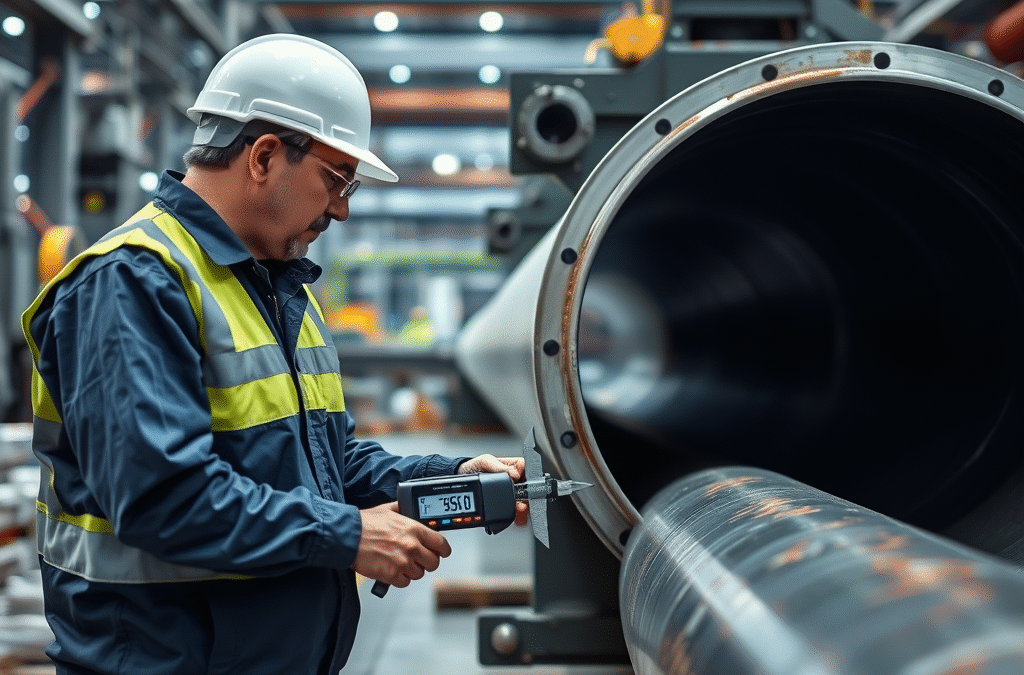
Accurate ovality measurement requires specialized equipment and standardized procedures. Common techniques include calibrated gauge comparison and laser profilometry. Gauges are positioned at multiple points around the circumference to capture variations. Data is plotted to generate an ovality diagram for analysis.
* Mechanical ovality gauges with adjustable arms
* Digital laser scanners with real‑time output
* Computed tomography for internal geometry assessment
* Hydrostatic pressure testing with deformable tube sensors
Measurements are typically expressed as a percentage deviation from circularity. The ovality index calculates the difference between major and minor diameters relative to the average diameter. Industry standards such as ASTM D 4449 define acceptable limits. Consistent sampling intervals ensure representative data across the pipe length.
Modern systems integrate software that automatically calculates ovality indices and flags exceedances. Real‑time feedback enables immediate adjustments to forming parameters. This automation reduces human error and speeds up quality checks. Reliable measurement is essential for maintaining product integrity.
Tolerances and Standards for Ovality
Manufacturers must adhere to defined tolerance ranges to meet project specifications. Standards such as ASME B31.3 and ISO 14627 set allowable ovality percentages. Typical limits are expressed as a fraction of the pipe diameter. Exceeding these thresholds triggers rejection or redesign.
* ASME B31.3 specification for pressure piping
* ISO 14627 measurement methodology for ovality
* API 5L requirements for line pipe dimensions
* EN 10210 criteria for seamless steel pipes
Different applications impose varying tolerance levels based on operating conditions. High‑pressure oil pipelines demand tighter ovality control than low‑pressure water mains. Temperature fluctuations can affect measured values, so tests are often performed at ambient conditions. Documentation of measured ovality is required for regulatory compliance.
Following established standards ensures that pipes perform as intended under service loads. Consistency in testing procedures facilitates comparison across suppliers. Clear communication of tolerance expectations reduces disputes during procurement. Ultimately, adherence protects both safety and project timelines.
Impact of Ovality on Fluid Flow and Pressure
Oval cross‑sections disturb laminar and turbulent flow patterns within a pipe. The irregular shape creates regions of higher velocity and shear stress. This can increase pressure drop and reduce overall energy efficiency. Consequently, fluid transport systems may require larger pumps to compensate.
* Increased friction losses due to asymmetric flow
* Potential for vortex shedding in highly distorted sections
* Alteration of flow distribution to connected equipment
* Higher susceptibility to cavitation in liquid services
In multiphase flow scenarios, ovality can exacerbate phase segregation and blockage risks. Accurate modeling of flow behavior must account for geometric irregularities. Engineers often apply correction factors to pressure drop calculations. Early detection of excessive ovality helps avoid operational inefficiencies.
Optimizing pipe roundness contributes to lower operational costs and improved system reliability. Selecting pipes with tight ovality tolerances supports smoother flow regimes. This consideration is especially critical in long‑distance transmission lines. Maintaining flow efficiency enhances overall plant performance.
Real-World Examples of Ovality Failures
Several industrial incidents have been linked to undetected ovality in piping components. In one case, an offshore platform experienced a burst pipe due to excessive ovalization after welding. The deformation concentrated stress at a weld joint, leading to catastrophic failure. Investigation revealed that the pipe had exceeded allowable ovality limits.
* Importance of post‑fabrication inspection
Need for stricter acceptance criteria Value of predictive modeling of stress concentrations * Enhanced training for quality control staff
Another example involved a water distribution network where oval pipes caused noisy water hammer effects. The irregular shape induced pressure spikes that damaged downstream valves. Upgrading to rounder pipes eliminated the problem and restored stable operation. This case underscores the link between geometry and system dynamics.
These examples demonstrate that ovality is not merely a cosmetic concern. It directly impacts safety, durability, and operational costs. Learning from past failures informs better design and production practices. Continuous improvement prevents repeat incidents.
Cost Implications of Ovality Defects
Ovality defects can lead to significant financial repercussions across the project lifecycle. Rejected pipes increase material waste and require re‑manufacturing. Remediation efforts add labor and scheduling delays. Moreover, premature failures result in costly repairs and potential downtime.
* Material re‑procurement and handling expenses
* Additional inspection and testing fees
* Legal and liability costs from accidents
* Loss of revenue due to service interruptions
Quantifying these costs helps stakeholders justify investment in quality assurance. Early detection of ovality reduces the likelihood of downstream failures. Implementing tighter controls may increase upfront expenses but saves money in the long term. Cost‑benefit analysis often favors proactive quality measures.
Overall, the economic impact of ovality extends beyond immediate repairs. It influences project schedules, stakeholder confidence, and long‑term asset management. Recognizing these financial stakes encourages better engineering discipline. Ultimately, preventing ovality defects supports sustainable project execution.
Best Practices to Prevent Ovality Issues
Adopting a holistic approach to pipe production minimizes ovality related risks. Process engineers should calibrate forming equipment regularly and monitor key parameters. Real‑time feedback systems can adjust roll pressures on the fly. These preventive steps maintain consistent geometry throughout the pipeline.
* Implement automated ovality monitoring at critical stations
* Use uniform cooling methods to avoid temperature gradients
* Train operators on proper handling and storage practices
* Conduct periodic audits of measurement equipment accuracy
Design specifications must include explicit ovality acceptance criteria. Suppliers should provide certification reports confirming compliance with tolerance limits. Joint ventures can include quality clauses that penalize non‑conforming deliveries. Clear contractual terms incentivize manufacturers to prioritize roundness.
Continuous improvement programs that track ovality trends enable early corrective actions. Root cause analysis of out‑of‑spec measurements drives process refinement. Feedback loops between production and quality teams foster accountability. These practices collectively raise overall product quality.
Future Trends in Pipe Quality Assurance
The pipe manufacturing sector is embracing advanced technologies to detect ovality with greater precision. Artificial intelligence algorithms analyze inspection data to predict potential defects. Non‑destructive testing methods such as ultrasonic phased arrays offer higher resolution imaging. Integration of IoT sensors enables continuous monitoring during production.
* Machine vision systems with deep learning classifiers
* Real‑time laser interferometry for sub‑micron measurements
* Cloud‑based analytics platforms for batch performance trends
* Predictive maintenance models linking ovality to service life
These innovations promise tighter control and reduced waste in pipe production. Manufacturers can achieve near‑zero defect rates through data‑driven decision making. Early adopters gain competitive advantage in high‑specification markets. Ongoing research aims to further refine measurement accuracy and process adaptability.
The future of pipe quality assurance lies in seamless integration of monitoring and control. As standards evolve, compliance will be measured by predictive metrics rather than reactive checks. Embracing these advancements ensures safer, more efficient piping systems for generations to come.
FAQs
1.What is pipe ovality meaning in simple terms?
It describes how much a pipe’s cross‑section deviates from a perfect circle. Small ovality can affect strength and flow efficiency.
2.How is ovality measured on a manufactured pipe?
Gauges or laser scanners compare diameters at multiple points around the pipe. The data is used to calculate an ovality index.
3.What are typical tolerance limits for ovality?
Standards usually allow up to 1‑2 % deviation from circularity for most applications. Higher‑pressure systems may require tighter limits.
4.Can ovality be corrected after a pipe is produced?
Minor distortions can sometimes be repaired by re‑forming or straightening. Severe cases usually require re‑manufacture.
5.Does ovality affect hydraulic performance?
Yes, it creates uneven flow paths that increase pressure drop and can cause vibrations. This may reduce system efficiency.
6.Which industries are most sensitive to pipe ovality?
Oil and gas, power generation, and water treatment often have strict ovality specifications. Even small deviations can cause safety concerns.
7.How often should ovality be inspected during a project?
Inspection is typically performed at receipt, after bending, and before installation. Additional checks may be required for critical sections.
8.What equipment is commonly used to detect ovality defects?
Digital gauges, laser scanners, and ultrasonic probes are standard tools. Some facilities use computed tomography for detailed analysis.
9.Is ovality related to other pipe shape defects?
Yes, it can coexist with eccentricity, taper, or twist. Combined defects amplify stress concentrations and reduce load capacity.
10.How do standards address ovality in pipe specifications?
Codes such as ASME B31.3 and ISO 14627 define measurable limits and testing procedures. Compliance ensures that pipes meet safety and performance criteria.