
Contents
- 1 How Climate Affects Pipes in Coastal Environment: A Complete Guide
- 1.1 What Makes Coastal Pipes Different
- 1.2 How Climate Accelerates Corrosion in Coastal Areas Pipes
- 1.3 Types of Pipes Most Affected by Coastal Conditions Not all pipe materials react the same way to salty air.
- 1.4 Spotting Early Signs of Corrosion in Coastal Areas Pipes
- 1.5 Practical Steps to Protect Pipes in Coastal Environment
- 1.6 Case Illustration: A Small Coastal Town’s Experience A seaside town installed a new water main along its shoreline.
- 1.7 Future Outlook: Emerging Technologies
- 1.8 Quick Recap: Protecting Pipes in Coastal Environment
- 1.9 FAQs
How Climate Affects Pipes in Coastal Environment: A Complete Guide
Summary:
Climate changes the way pipes in coastal environment behave. Salt, humidity, temperature swings, and storm surges speed up corrosion in coastal areas pipes, leading to leaks, breaks, and costly repairs. This guide explains the science, shows warning signs, and offers simple steps to protect infrastructure in salty coastal zones.
—
What Makes Coastal Pipes Different
Coastal zones combine three key climate factors: salt spray, high humidity, and rapid temperature changes.
These factors create a harsh setting for any pipe system.
Unlike inland locations, the air near the sea carries tiny salt crystals. When water runs through a pipe, those crystals stick to the inner walls.
Over time the salt reacts with metal and accelerates rust.
The constant push and pull of tides also adds pressure fluctuations.
All of these forces work together to weaken pipe material faster than in dry areas.
Key Climate Drivers 1. Salt spray – tiny salt particles settle on pipe surfaces.
Together they create a compounding effect that shortens pipe life.
How Climate Accelerates Corrosion in Coastal Areas Pipes
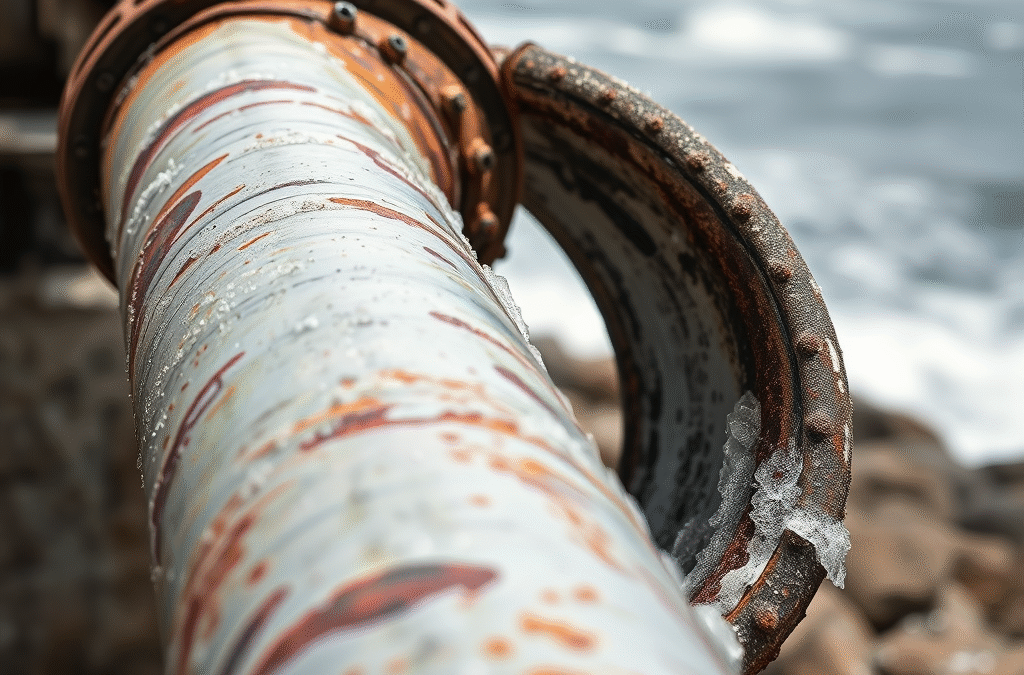
Corrosion is a chemical reaction between metal and its environment.
In coastal settings the reaction speeds up for several reasons.
First, salt acts as an electrolyte, allowing electrons to move more freely.
Second, moisture provides the medium for the reaction to occur.
Third, temperature changes increase the speed of chemical processes. ### Electrochemical Basics
- Anode – a spot where metal loses electrons (oxidation).
- Cathode – a spot where metal gains electrons (reduction).
- Electrolyte – a conductive fluid, in this case salty water.
When a pipe is exposed to salt spray, the salty water becomes a thin electrolyte film.
This film connects tiny anode and cathode sites on the pipe surface. Electrons flow through the film, creating rust at the anode site.
The process repeats as long as salt, water, and oxygen are present.
Real‑World Consequences
- Pinhole leaks appear in steel or copper lines.
- Joint failures weaken connections at flanges or couplings.
- Structural degradation can cause entire sections to collapse.
- Maintenance costs rise as crews replace or repair damaged sections more often.
Types of Pipes Most Affected by Coastal Conditions Not all pipe materials react the same way to salty air.
Here’s a quick look at the most vulnerable types and why. ### Steel Pipes
- Carbon steel rusts quickly when exposed to salt and moisture.
- Galvanized steel has a zinc coating that slows corrosion but eventually wears away.
Copper Pipes
- Copper resists rust but can suffer from pitting corrosion in salty water.
- Pitting creates small holes that are hard to detect early.
PVC and HDPE
- These plastics do not rust, but UV rays from strong sunlight can make them brittle.
- Brittle plastic may crack under pressure changes, inviting water intrusion. ### Composite and Fiberglass Pipes – They resist corrosion well but can degrade when UV exposure is prolonged.
- Proper protective coatings extend their usable life.
Spotting Early Signs of Corrosion in Coastal Areas Pipes
Detecting problems early saves money and prevents service interruptions.
Look for these common clues.
- Discoloration – reddish brown stains on pipe surfaces.
- Rust spots – flaky patches that spread outward.
- Leakage – water drips near joints or valves.
- Metallic taste in water may indicate pipe breakdown.
- Reduced water pressure – a sign of internal buildup or narrowing.
Simple Inspection Checklist
Practical Steps to Protect Pipes in Coastal Environment
Protecting coastal pipes starts with design, continues with material choice, and ends with ongoing maintenance.
Design Strategies
- Elevate critical lines above predicted flood levels.
- Use larger pipe diameters to reduce water velocity and stress.
- Install drainage that directs salt water away from pipe joints.
Material Choices
- Stainless steel offers better corrosion resistance than carbon steel.
- HDPE with UV stabilizers lasts longer in sunny coastal zones.
- Coated pipes with epoxy or polymer layers add a protective shield.
Corrosion Protection Methods
- Cathodic protection uses sacrificial anodes to prevent rust formation.
- Regular coating inspections ensure protective layers stay intact.
- Salt‑water flushing removes accumulated salt crystals after storms.
Maintenance Routine
Case Illustration: A Small Coastal Town’s Experience A seaside town installed a new water main along its shoreline.
Within two years, several sections showed rust patches.
The town’s engineers traced the issue to frequent salt spray and high humidity.
They responded by:
- Adding a zinc coating to the steel pipe.
- Installing protective sleeves around vulnerable joints. – Implementing a quarterly cleaning schedule.
After one year, corrosion rates dropped dramatically.
Repair costs fell by more than half, and water service remained stable during the next storm season.
Future Outlook: Emerging Technologies
New tools help cities monitor pipe health in real time.
Consider these innovations for coastal pipe management.
- Fiber‑optic sensors that detect strain and temperature changes along the pipe length.
- Remote monitoring platforms that alert operators to early corrosion signs.
- Self‑healing coatings that fill tiny cracks automatically when exposed to water.
- 3D‑printed polymeric liners that provide an extra barrier against salt water.
When paired with regular inspections, these technologies can extend pipe lifespan dramatically.
Quick Recap: Protecting Pipes in Coastal Environment
- Salt, humidity, and temperature swings accelerate corrosion in coastal areas pipes.
- Different pipe materials react uniquely; choose corrosion‑resistant options where possible.
- Early detection saves money: look for rust, leaks, and pressure drops.
- Protective coatings, cathodic protection, and regular cleaning are essential.
- Emerging sensors and coatings offer promising long‑term solutions.
Take action now to safeguard your coastal pipe network before costly failures occur.
—
FAQs
1. What is the main cause of corrosion in coastal areas pipes?
Salt spray provides an electrolyte that speeds up the chemical reaction that creates rust. 2. How often should coastal pipes be inspected?
Inspect exposed sections at least every three months, or after any major storm.
3. Can plastic pipes corrode in coastal environments?
Plastics do not rust, but UV exposure can make them brittle, leading to cracks.
4. Are stainless steel pipes completely immune to corrosion? They resist corrosion much better than carbon steel, but they can still degrade under extreme salt exposure.
5. What is cathodic protection and when should it be used?
It uses sacrificial anodes to prevent metal from oxidizing; it is ideal for buried or submerged steel pipes.
6. How does temperature fluctuation affect pipes?
Heat expands metal, cold contracts it; repeated cycles create stress that can crack protective coatings.
7. Is it worth upgrading old pipes in a coastal city? Yes, especially if they show signs of rust, leaks, or frequent repairs; newer materials last longer.
8. Can vegetation influence pipe corrosion?
Plant roots can hold moisture against pipes, increasing corrosion risk; keep a clear zone around buried lines.
9. What simple maintenance step reduces salt buildup?
Rinse exposed pipes with fresh water after storms to wash away salt crystals.
10. Do coatings need regular replacement? Yes, inspect coatings annually and reapply when cracks or peeling appear.
11. How do I know if a pipe has internal corrosion?
Look for reduced water pressure, discoloration in water, or unexpected leaks.
12. Are there regulations for pipe materials in coastal zones?
Many municipalities require corrosion‑resistant materials for new installations near shorelines.
13. Can monitoring sensors be retrofitted to existing pipes?
Yes, fiber‑optic or acoustic sensors can be attached without major excavation. 14. What future material looks most promising for coastal use?
Hybrid composite pipes with built‑in UV and salt resistance show the best performance outlook.
15. Is professional help required for complex corrosion issues?
Yes, engineers and certified inspectors should assess severe or widespread corrosion problems.